vincent hannwacker
works
Sterne am Tag
2026, 15 min.
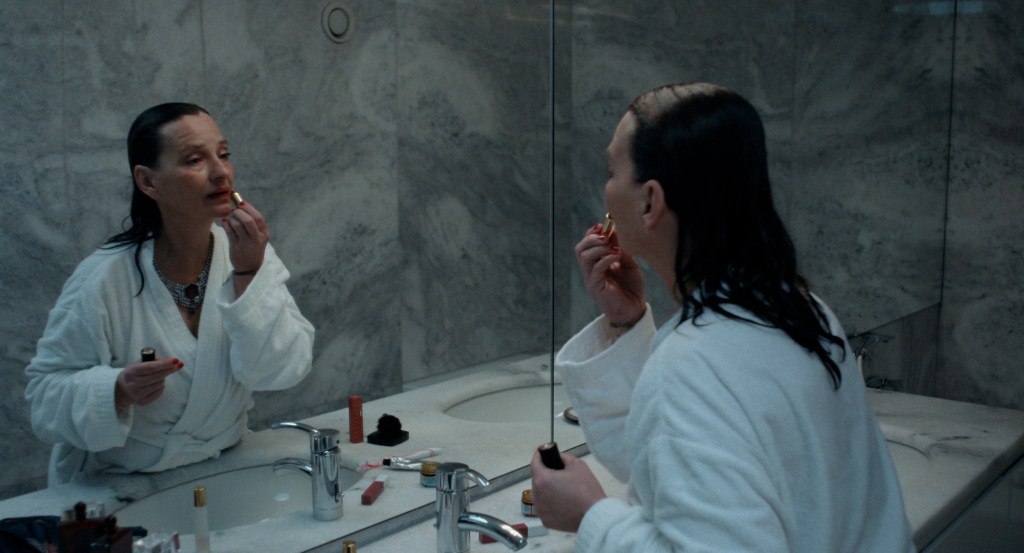
In this narrative short film, the former actress Charlotte moves into the apartment of her late mother. As her thoughts increasingly revolve around her mother – a film star of postwar German cinema – she receives an unexpected visit from her brother and two filmmakers who want to use the apartment as a shooting location. But soon they discover something hidden within the apartment.
directed by Marlene Arnold, written & produced by Vincent Hannwacker
La próxima generación
2025, 7 min.
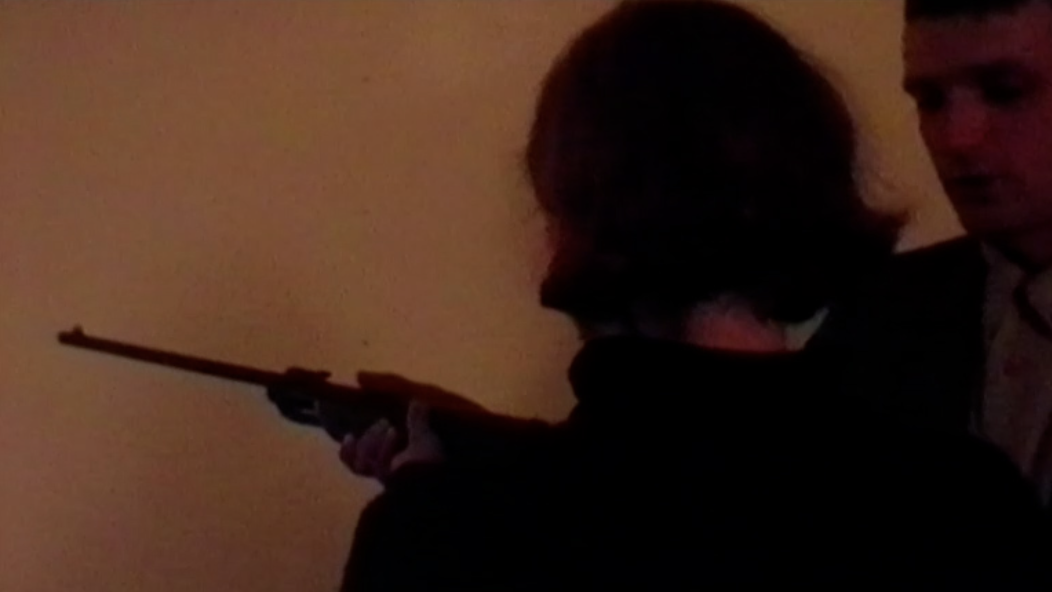
In La próxima generación, Vincent Hannwacker examines the rise of the Argentinian neo-Nazi group Tacuara in the 1960s. In the wake of Adolf Eichmann’s capture in Buenos Aires, the group’s predominantly youthful members carried out a series of antisemitic attacks, kidnappings, and murders. Hannwacker reconfigures period newspaper articles into a fragmented slideshow that reflects the complexity and fractured historical memory of the time.
The work was created during the residency at URRA in Buenos Aires, supported by the Goethe Institut Buenos Aires, the Department of Arts and Culture of Munich, and the Instituto Cervantes Munich.
Driving down Broadway
2025, 18 min.
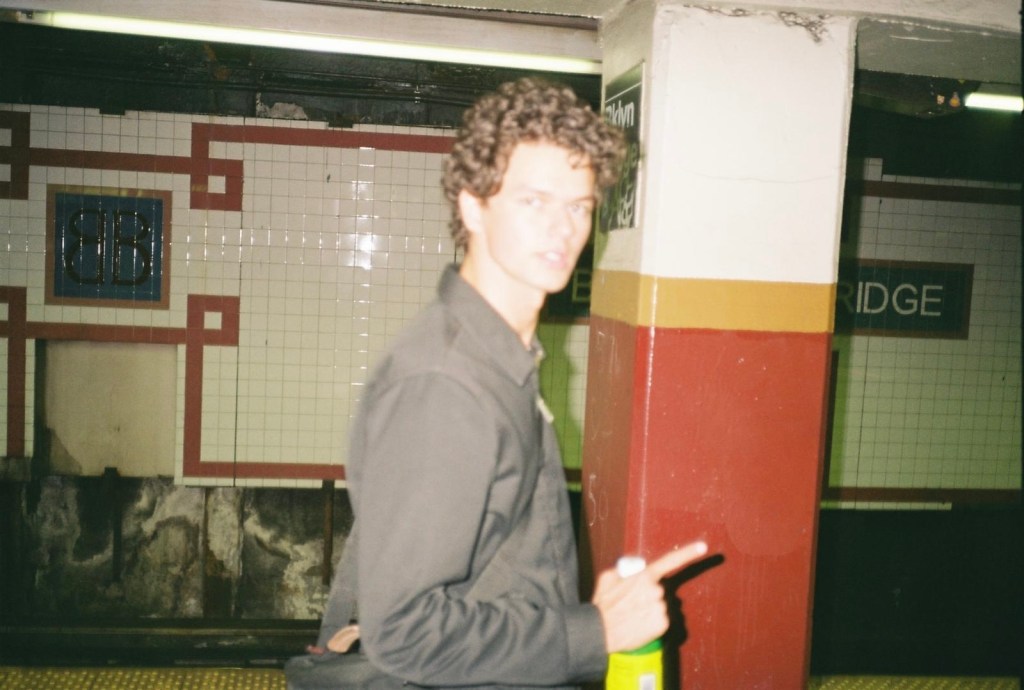
Driving down Broadway is a documentary video work that captures a journey along Broadway in New York, filmed purely through observation from bus windows and a rented bicycle. World-famous for its theater district, Broadway is the city’s longest and oldest street and the only one that cuts diagonally through Midtown’s grid. This unique alignment gives the Flatiron Building its iconic shape, while on the map, Broadway appears as the last remnant of the path once used by Native Americans, later adopted by the first Dutch settlers.
As the sidewalks pass by the viewers, Broadway becomes a symbol of the American Dream. Beginning in the socially underprivileged Bronx, it leads through Times Square, the temple of consumption, down to the Financial District at Manhattan’s southern tip, where decisions about the global economy are made. Driving down Broadway serves as a unique document and a portrait of New York and the United States.
K.
2025, 5 min.
K. is an AI-generated free adaptation of a few lesser-known writings and short stories by Franz Kafka. The work unites these fragments into a continuous stream, creating a dreamlike atmosphere in which the boundaries between reality and the subconscious blur. Through the immersive visual experience, viewers are drawn into a world that is at once strange and oddly familiar, reflecting Kafka’s recurring themes of alienation, surrealism, and the absurdities of life.
K. questions the role of artificial intelligence in art and its potential to explore the emotional depths of human experience. By combining Kafka’s texts with contemporary AI methods, the work challenges traditional forms of storytelling and invites the audience to experience Kafka’s oeuvre anew, which feels more relevant than ever.
MoneyNations
2024, 23 min., in collaboration with Ilinca Fechete and Martin Huber
MoneyNations was an exhibition, a webzine, a radio program, a conference, a video archive, a printed publication, an infrastructure, a counter-public, an ongoing discussion, and a transnational network of friends, initiated by Marion von Osten. The project emerged from the urgency to respond to the hegemonial forces of the “West” within the radically changed conditions of post–Cold War Europe. MoneyNations addressed and intervened in the interdependence between “transnational capital flows,” media representation, exploitative economic relations, and processes of identity formation and reconfiguration.
In an attempt to delineate the profound political relevance of these efforts as well as their coincidental connection to our own findings, our work organizes and intertwines private archival material from LaborK3000 with publicly accessible material from the Swiss Social Archive, including images, correspondence, and other ephemera, into a video work. Parts of the MoneyNations research trips between 1998 and 2000 are presented alongside excerpts from interviews, aiming to “build a counter-representational pool of theorists to discuss questions of representational politics in the perception of the so-called East and their significance for border construction, new nationalism, and low-wage production sites.”
The suspect Vincent Hannwacker
2024, slide projection
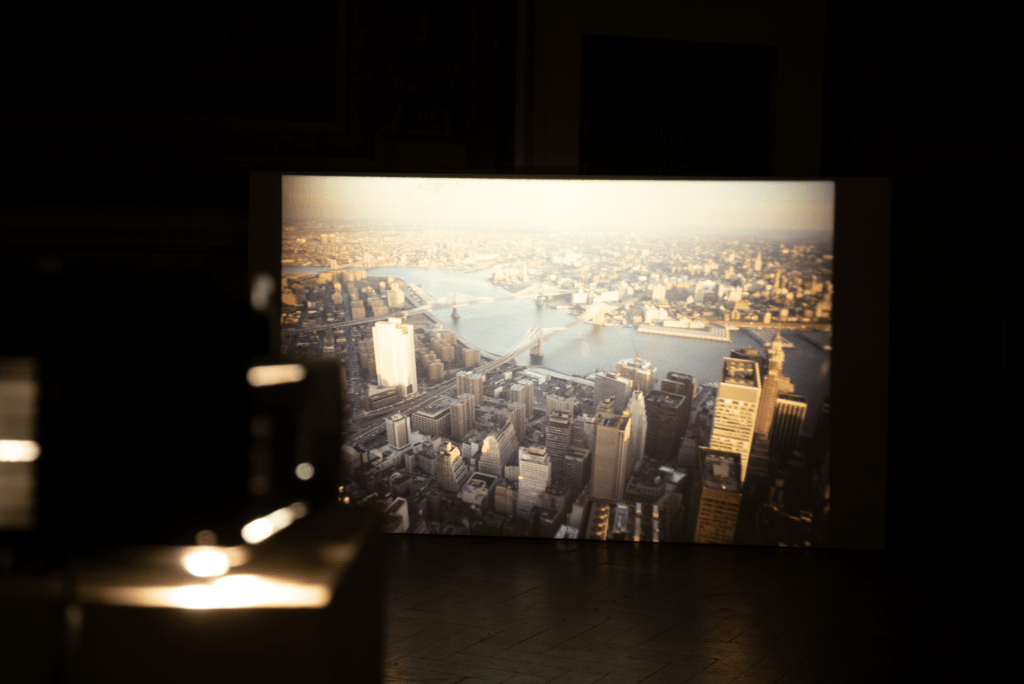
At some point, while Googling myself—as one does—I came across a 1986 New York Times article about a small time criminal: a clerk who sold office supplies and furniture from his workplace during business hours, and was eventually caught. The article reads like the plot of a gangster film, complete with “undercover detectives posing as businessmen.” And the protagonist of the story shares the same name as me: Vincent Hannwacker.
Reading the article, and feeling the strange surrealism of seeing my name at the center of a 1980s New York crime story, I asked myself: who was this man? The only namesake I could find on the internet. In my work, I aim to revive this overlooked footnote from nearly forty years ago, embarking on a search for my criminal double. Using my father’s slides—who was also in New York in the mid-1980s—excerpts from the original New York Times article, and new slide photographs of the real locations mentioned, I tell the story of Vincent Hannwacker: “the man who was supposed to mind the store but ended up selling it.”
Der Selbstmord der Susanne Kuhn
2022, 18 min.
The video work observes the protagonist Susanne Kuhn during the final preparations before her suicide. In static shots, she tidies up, writes her farewell letter, and takes a shower before sitting on the bed, taking pills, and waiting for death. A examination of suicide that is neither romanticized nor psychologized.
Musarion
2020, 27 min., co-direction: Dominik Bais, Marie Jaksch, Mara Pollak, Julian Rabus
Musarion adapts the eponymous story by the writer Christoph Martin Wieland and transposes the love story into the present day. Phanias has withdrawn from Athens to the countryside to leave his old life behind. But one day he encounters his former lover, Musarion, who seeks to bring him back to reason. The art film explores the struggle for an enlightened form of love, one capable of overcoming philosophical and political fanaticism. Musarion is a collaborative film by five artists, combining elements of the original text with opera, theater, video art, and narrative cinema.
Lucy & Llibert
2018, 9 min.
Lucy is from Germany. Llibert is from Spain. Both are twenty-two. A documentary portrait of the two, their language barriers, and the feeling of being young and in love. The short film was shot on 16mm and combines the footage with analog black-and-white photographs. At the same time, the film also functions as a love letter to the Nouvelle Vague.
about
Vincent Hannwacker was born in 1997 in Munich, DE
2024 graduation Academy of Fine Arts Munich in the class of Julian Rosefeldt as his Meisterschüler
2024 graduation University of Television and Film Munich
awards/residencies/scholarships
- ARD Impuls Prize, 2021
- Playground Art Prize, 2022
- Erasmus+ scholarship in Bologna, IT and Marseille, FR, 2023 and 2024
- scholarship for Fine Arts, City of Munich, 2024
- nomination Ketterer Kunst Masterclass Prize, 2024
- European art scholarship of the district of Upper Bavaria artist residency, Split, HR, 2025
- Kunstaugust Gut Sonnenhausen artist residency, Glonn, DE, 2025
- URRA artist residency, Buenos Aires, AR, 2025
selected exhibtions and screenings
- Fipadoc International Documentary Film Festival Biarritz, Biarritz, FR, 2019
- International Video Art Festival Casablanca, Casablanca, MA, 2019
- Künstliche Paradiese, Kunstverein Leipzig, Leipzig, DE, 2021
- Videodox – Biennale for Video Art, Munich, DE, 2021
- Lassitude, Goethe-Institut Paris, Paris, FR, 2022
- Rencontres International Paris, Louvre, Paris, FR, 2022
- Playground Art Prize, Galerie Von & Von, Nuremberg, DE, 2022
- Rencontres International Berlin, Haus der Kulturen der Welt, Berlin, DE, 2022
- Festival of the Bavarian Academy of Fine Arts, Bamberg, DE, 2023
- Red like the sea, Kunstquartier Bethanien, Berlin, DE, 2023
- Diploma exhibition, Academy of Fine Arts Munich, Munich, DE, 2024
- Ketterer Kunst Masterclass Prize, Ketterer Kunst, Munich, DE, 2024
- ⋮ platform, Lothringer 13 Halle, Munich, DE, 2024
- meine drei lyrischen ichs, Kunstverein Munich, Munich, DE, 2025
- Frémito, Kunstarkaden, Munich, DE, 2025
- Open studio, Palacio Barolo, Buenos Aires, AR, 2025
vincent.hannwacker@gmail.com




 Vincent Hannwacker